
Table of Contents
Summary
In this blog, we’ll explore both approaches in simple terms, so you can understand what goes into making your favorite sarees and how to choose the right manufacturer for your needs.
introduction
Surat, located in Gujarat, India, is famously known as the textile capital of the country. For decades, this vibrant city has been the heart of India’s saree manufacturing industry. Whether you’re a retailer looking to stock your shop, a bride searching for that perfect wedding saree, or a wholesale buyer planning bulk orders, understanding how sarees are made can help you make better choices.
Every Saree Manufacturer In Surat uses different techniques to create beautiful sarees, and these methods can be broadly divided into two categories: traditional techniques that have been passed down through generations, and modern techniques that use the latest technology.
Understanding Traditional Saree Making Techniques
Traditional saree making is an art form that has existed in India for thousands of years. These age-old techniques require skilled artisans who have learned their craft through years of practice and training. When you hold a traditionally made saree, you’re not just holding a piece of cloth but a piece of heritage and culture.
Handloom weaving is perhaps the most respected traditional technique. In this method, skilled weavers sit at wooden looms and create sarees thread by thread, using their hands and feet to operate the loom. The process is slow and requires intense concentration. A single handloom saree can take anywhere from three days to several weeks to complete, depending on the complexity of the design. The beauty of handloom sarees lies in their uniqueness. Each piece has slight variations that make it special and one-of-a-kind.
These sarees are breathable, comfortable, and have a natural texture that machine-made sarees cannot replicate. However, because of the time and skill involved, handloom sarees are generally more expensive than their machine-made counterparts.
Hand block printing is another traditional technique that many manufacturers in Surat still practice. In this method, artisans carve intricate designs onto wooden blocks. These blocks are then dipped in natural dyes and carefully stamped onto the fabric to create beautiful patterns. The process requires a steady hand and a good eye for alignment, as each block must be placed perfectly to create a seamless design. Block-printed sarees have a rustic charm and are particularly popular for cotton and silk sarees. The slight imperfections in hand block printing add character to the saree, making each piece truly unique.
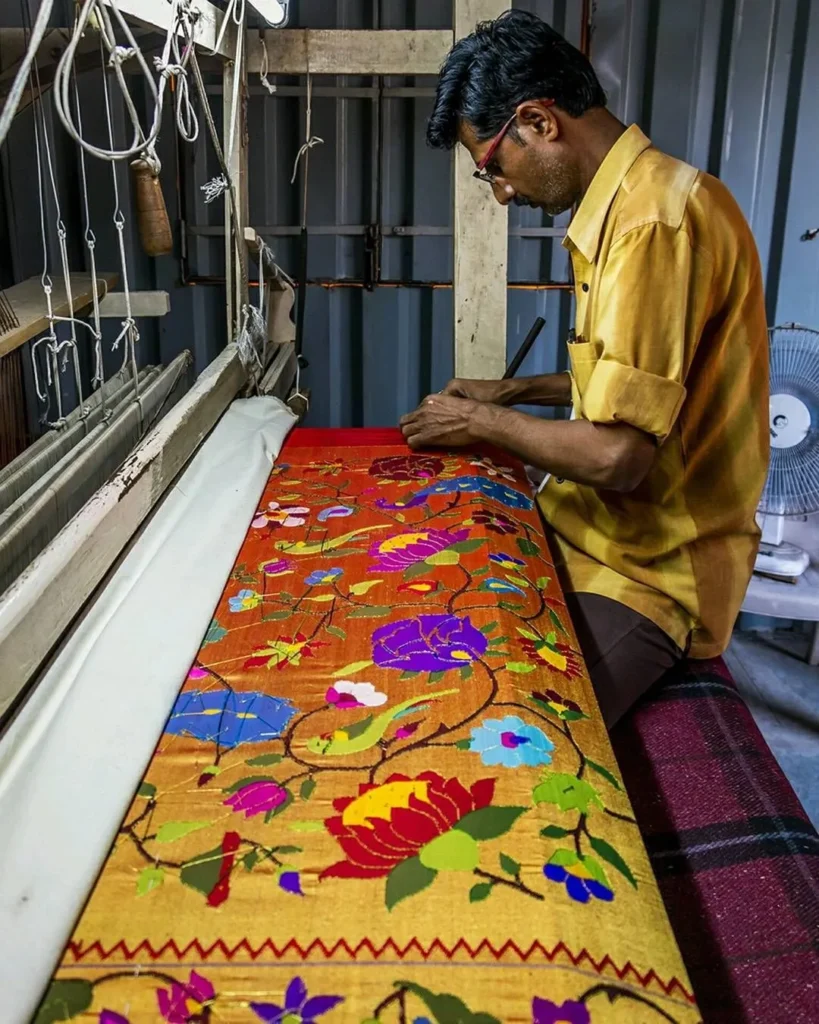
Hand embroidery and zari work represent some of the finest traditional craftsmanship in Indian textiles. Zari refers to the metallic thread, traditionally made of gold or silver, that is woven or embroidered onto fabric to create elaborate designs. Skilled embroiderers spend hours, sometimes even months, working on a single saree to create intricate patterns of flowers, peacocks, paisleys, and geometric designs.
These heavily embroidered sarees are considered precious and are often worn at weddings and special celebrations. The weight of the zari work, the fineness of the embroidery, and the complexity of the design all contribute to the value of these sarees.
Natural dyeing methods were the standard practice before chemical dyes became available. Traditional artisans would extract colors from plants, flowers, roots, bark, and minerals to dye their fabrics. Turmeric gave yellow, indigo provided blue, madder root created red, and pomegranate rinds produced soft browns.
These natural dyes are gentle on the skin, environmentally friendly, and create subtle, earthy tones that many people find appealing. While natural dyeing is time-consuming and the colors may fade slightly faster than chemical dyes, the eco-friendly nature of this process has made it popular again in recent years.
Modern Techniques Used by Saree Manufacturer In Surat
As technology advanced, the textile industry in Surat embraced modern techniques that revolutionized saree production. These methods allow manufacturers to produce beautiful sarees faster, more consistently, and at more affordable prices, making quality sarees accessible to a broader audience.
Power loom technology transformed the weaving industry completely. Unlike handlooms that are operated manually, power looms are mechanized weaving machines that can work continuously at high speeds. A power loom can produce in one day what might take a handloom weaver a week or more to create. This dramatic increase in production speed means that manufacturers can fulfill large orders quickly and offer sarees at much lower prices. Power loom sarees are consistent in quality, with uniform patterns and even weaving throughout.
While they may lack the individual character of handloom sarees, they are perfect for everyday wear and for businesses that need to maintain consistent inventory.
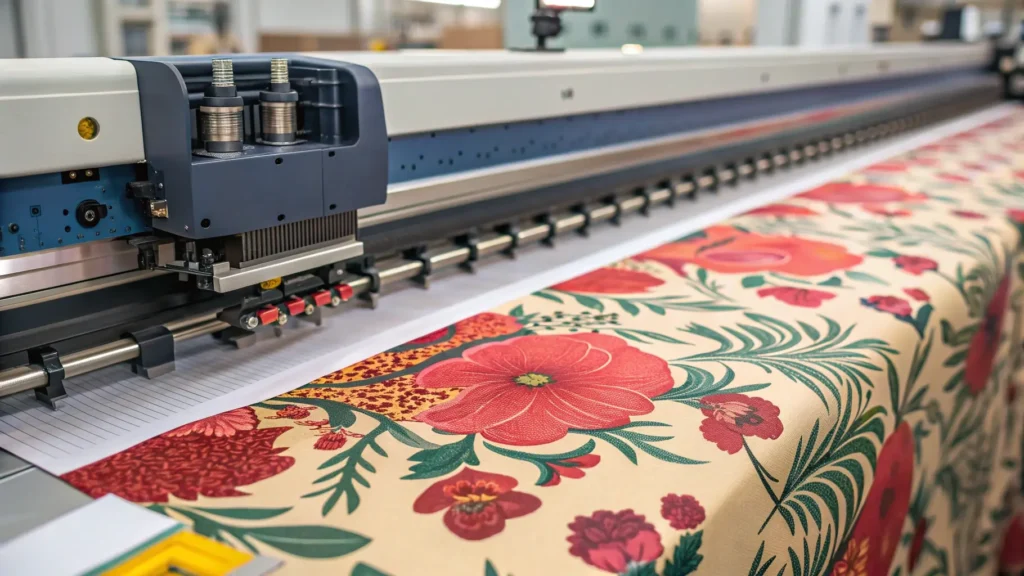
Digital printing has opened up entirely new possibilities for saree design. Using computer software and large-format printers, manufacturers can now print virtually any design onto fabric with incredible precision and detail. Photographs, complex gradients, fine details, and multi-colored patterns that would be impossible or extremely difficult to create through traditional methods are now easily achievable. Digital printing is fast, cost-effective for small batches, and allows for quick design changes.
A Saree Manufacturer In Surat using digital printing technology can offer customers hundreds of design options and even create custom prints based on individual preferences. The colors in digitally printed sarees are vibrant and the level of detail can be extraordinary.
Automated embroidery machines have made decorative work more accessible and affordable. These computer-controlled machines can replicate intricate embroidery patterns with perfect consistency across hundreds of sarees. While the work lacks the soul and slight variations of hand embroidery, machine embroidery is precise, fast, and much more economical. For bulk orders where consistency is important, such as for bridal party sarees or uniform sarees for events, machine embroidery is an excellent choice.
Modern embroidery machines can work with various thread types including metallic threads, creating effects similar to traditional zari work at a fraction of the cost.
Chemical dyeing techniques in modern factories ensure color fastness and consistency. Using synthetic dyes and controlled dyeing processes, manufacturers can achieve bright, long-lasting colors that won’t fade easily even after multiple washes. Quality control measures ensure that every batch of sarees has the same shade, which is crucial for businesses selling matching sets or coordinated collections. Modern dyeing facilities also have better temperature and pH controls, resulting in even dye penetration and superior color quality throughout the fabric.
How Saree Manufacturer In Surat Combines Both Methods
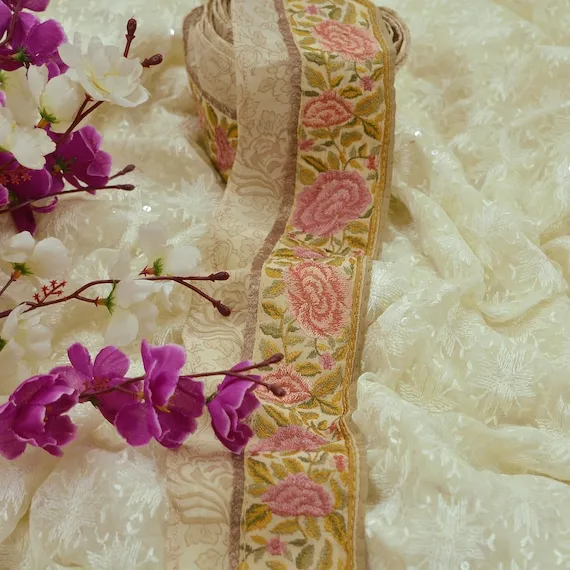
The most innovative manufacturers in Surat have realized that the best results often come from combining traditional and modern techniques. This hybrid approach allows them to offer products that have the charm of traditional craftsmanship with the efficiency and affordability of modern production. For example, a manufacturer might use power looms to weave the basic saree fabric quickly and economically, but then add hand-embroidered borders or pallus to give the saree a premium, handcrafted finish. This approach reduces the overall production time and cost while still incorporating the special touch that only skilled artisans can provide.
Many manufacturers also use digital printing for the body of the saree but add hand-painted details or hand-applied embellishments to create unique pieces. This combination gives customers a wide variety of designs at reasonable prices while maintaining some level of exclusivity. Quality standards are maintained through regular inspections at various stages of production, ensuring that both the machine-made and handcrafted elements meet the required specifications. This balanced approach has made Surat manufacturers competitive in both domestic and international markets.
Benefits of Traditional Techniques
Traditional saree-making techniques offer several unique advantages that modern methods simply cannot replicate. The most significant benefit is the uniqueness of each piece. Because handloom sarees are woven by individual artisans, no two sarees are exactly alike. The slight variations in tension, the personal rhythm of the weaver, and the natural inconsistencies of hand work all contribute to making each saree distinctive. For someone looking for a truly special saree for a wedding or important occasion, this uniqueness is invaluable.
Supporting traditional techniques also means supporting local artisan communities and preserving centuries-old skills. When you purchase a traditionally made saree, you’re helping to sustain the livelihoods of skilled weavers, block printers, and embroiderers, many of whom come from families that have practiced these crafts for generations. Traditional sarees often have better resale value and are sometimes passed down as family heirlooms.
A well-maintained handloom silk saree or a heavily hand-embroidered piece can actually appreciate in value over time. The cultural and heritage value of traditional sarees cannot be measured in money alone. These pieces connect us to our roots and represent the living traditions of Indian textile arts.
Benefits of Modern Techniques
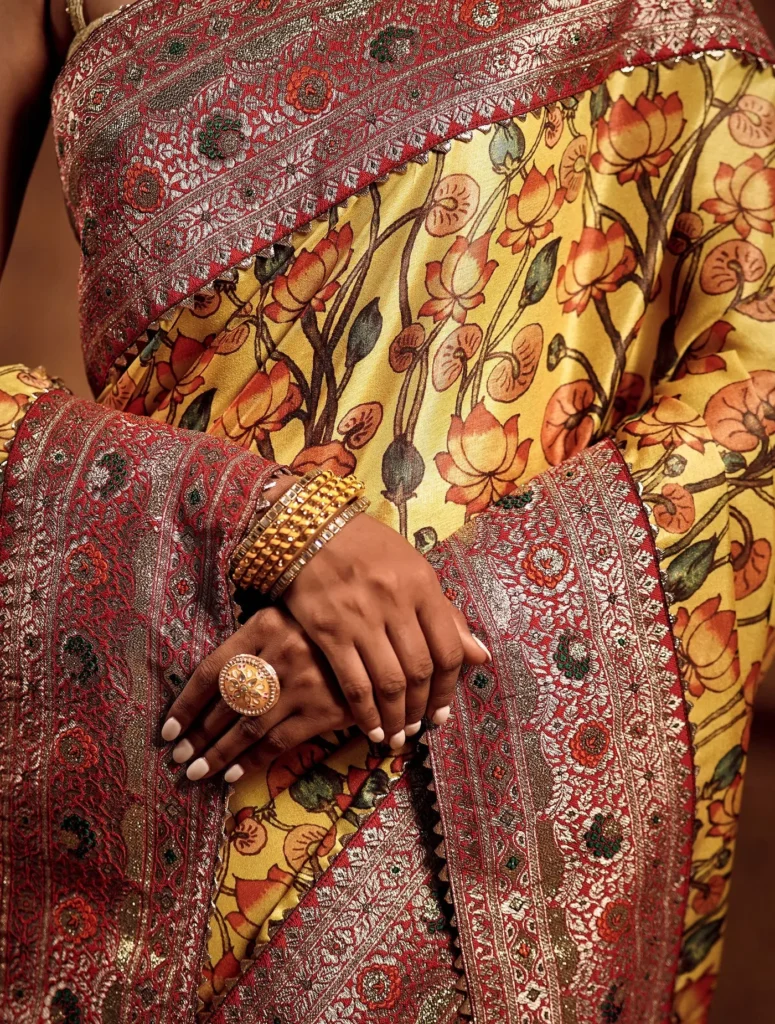
Modern manufacturing techniques have democratized access to beautiful sarees by making them affordable for everyone. A working woman can now own a wardrobe of lovely sarees without spending a fortune, and small retailers can stock diverse collections without huge investments. The affordability of modern sarees has made this traditional garment accessible to a much wider audience.
Speed is another major advantage. When a Saree Manufacturer In Surat uses modern techniques, they can fulfill large orders in relatively short timeframes. This is crucial for businesses that need to respond quickly to fashion trends or seasonal demands. Consistency is also guaranteed with modern methods. When you order a hundred sarees, you can be confident that all hundred will look identical in terms of color, pattern, and quality. This uniformity is essential for businesses, bridal parties, or any situation where matching sarees are needed.
Modern techniques also offer incredible variety. Digital printing alone has expanded the design possibilities exponentially. Customers can choose from countless patterns, colors, and styles, with new designs being created constantly. For everyday wear and practical purposes, modern sarees are often the better choice. They’re usually easier to care for, more durable for regular use, and can be replaced affordably if damaged.
What to Look for When Choosing Your Saree Manufacturer In Surat
If you’re a retail buyer looking to source sarees, start by understanding your target customers and their preferences. Ask manufacturers about their production processes and request samples to assess quality firsthand. Check the fabric quality, color fastness, finishing, and overall craftsmanship. Understand your budget clearly and find manufacturers who can work within your price range while maintaining acceptable quality standards. Don’t hesitate to ask detailed questions about thread count, dye quality, and quality control processes.
For wholesale or bulk orders, production capacity becomes crucial. Can the manufacturer handle your order volume within your required timeline? Manufacturers using modern techniques typically have higher capacity and can deliver larger orders faster. Discuss delivery timelines honestly and build in some buffer time for unexpected delays. Ask about customization options such as custom prints, colors, or embroidery patterns. Many Surat manufacturers are flexible and can accommodate special requests, especially for bulk orders.
If you’re in the export business, ensure that the manufacturer understands and can meet international quality standards. Look for certifications such as ISO certifications, eco-labels, or quality marks that are recognized in your target markets. Discuss packaging requirements, as export sarees often need special packaging to survive international shipping. Verify that the manufacturer has experience with export documentation and logistics.
Real Examples: Popular Saree Types and Their Making Process
Bandhani sarees are a perfect example of traditional tie-dye technique that Surat is famous for. Artisans tie thousands of tiny knots in the fabric before dyeing it, creating characteristic small dots in intricate patterns. This labor-intensive process can take several days for a single saree, but the result is stunning and truly unique. Georgette printed sarees, on the other hand, showcase modern printing technology.
These lightweight sarees feature everything from floral prints to abstract designs, created quickly through digital or screen printing processes. Silk sarees with machine embroidery represent the hybrid approach, combining the luxury of silk fabric with the precision and affordability of automated embroidery. Cotton daily wear sarees produced on power looms are the workhorses of the saree industry, providing comfortable, affordable options for everyday use.
Future Trends in Surat's Saree Manufacturing
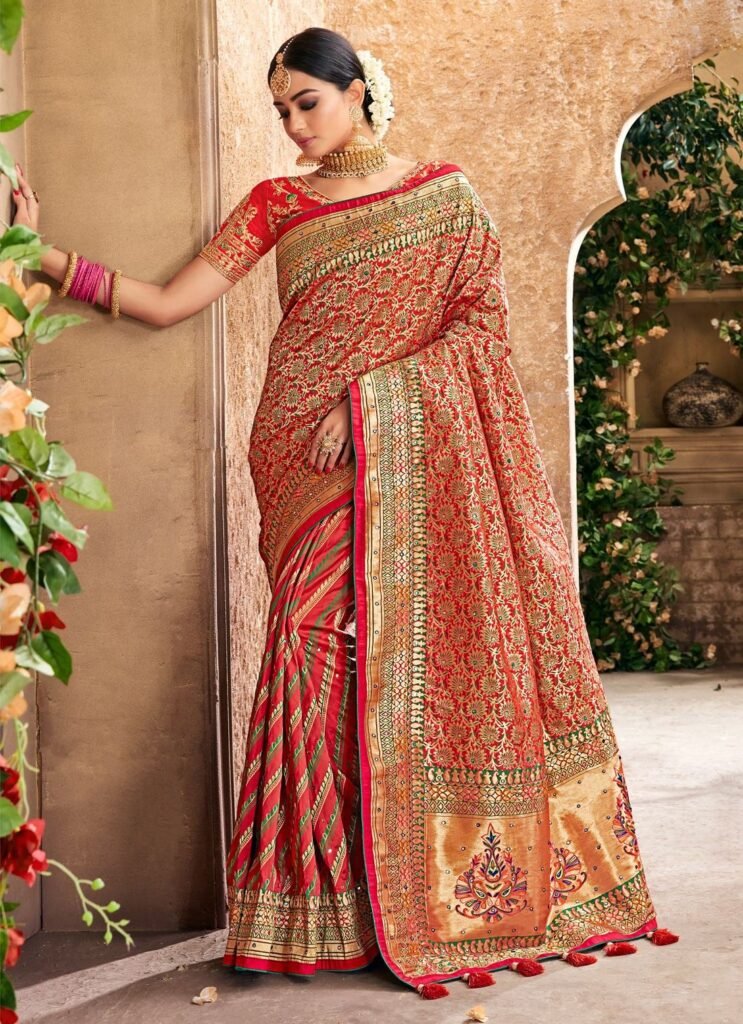
The future of saree manufacturing in Surat looks bright and innovative. Environmental consciousness is driving the adoption of eco-friendly modern techniques such as water-saving dyeing processes, organic fabrics, and sustainable production methods. We’re seeing exciting combinations of digital design with traditional craftsmanship, where designers create patterns on computers, but execution involves skilled artisans.
Sustainability is becoming a priority, with more factories implementing waste reduction, energy efficiency, and fair labor practices. Buyers can expect even more variety, better quality at competitive prices, and increased transparency about production methods in the coming years.
Conclusion
Saree Manufacturer In Surat is flourishing saree industry, there are two categories of sarees – traditional sarees and modern sarees. Traditional sarees are characterized by their individuality, ethnicity/cultural heritage, and high standard of craftsmanship. These qualities make traditional sarees expensive, yet the price reflects the level of artistry involved in the making of each piece of clothing. On the other hand, modern sarees are designed to be less costly than traditional sarees, while providing their wearers with consistent and uniform quality and functionality.
Because of the variety of choices available, it is important to determine your requirements, and to set a budget before selecting either type of saree. A bride who wants a traditional saree to wear on her wedding day may later choose to buy modern sarees for her daily work outfits. The great benefit of dealing with a saree manufacturer in Surat is that you are able to access both categories of sarees, often through the same vendor.
At ThePrintinkco, we specialize in connecting businesses to quality manufacturers of Sarees from Surat. We provide our customers with access to both traditional craftsmanship, as well as modern-day mass production capabilities. Please contact us today for additional information on our extensive selection of sarees, ordering in bulk or discussing your specific needs for custom manufactured saree products to help fulfill your vision of being in the saree industry!