Table of Contents
Introduction
A designer from Surat once sent us her artwork on a Monday. By Friday she was holding five metres of custom printed fabric. The colours? Off. Completely. Nobody had told her that a screen glows while fabric absorbs, and that one gap ruins more collections than bad design ever will. If you’re planning custom fabric printing for your label, this guide is what she wished she had. We’ll keep it simple, a bit honest, and (promise) not boring.
Here’s the thing. Search for custom fabric printing India and you get hundreds of names that all sound the same. This blog sorts out the noise: methods, fabrics, pricing, mistakes, partners. Read it with a chai. Maybe keep a notebook nearby too.
What Is Custom Fabric Printing (and Why Indian Brands Are Moving Toward It)
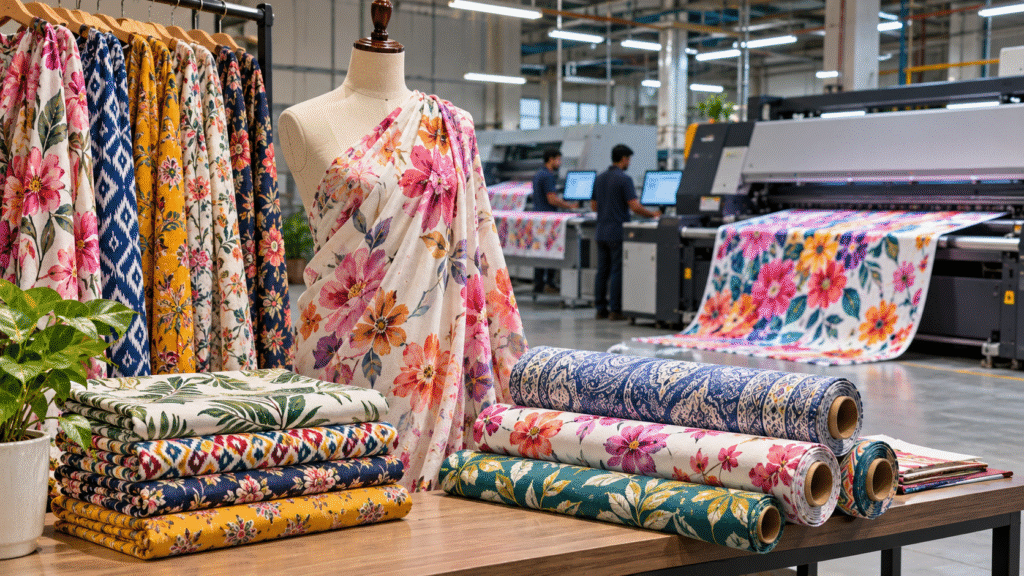
Custom textile printing simply means your design, your colours, your repeat, printed on a fabric you chose yourself. No catalogue. No “sorry, that print is sold out.” You decide what goes on the metre.
Ready-made prints are fine when you’re testing the waters. But what happens when ten other labels are selling the same floral? Your collection looks like theirs. Customers can’t tell the difference, and honestly, neither can you.
That’s why more boutiques, home décor brands, exporters and young fashion labels are shifting to printed fabric for fashion brands that carries their own identity. A print becomes a signature. Think of the way people recognise a brand from across a room, before they even see the logo. That starts at the fabric level, long before the stitching begins.
It isn’t only for big names either. A two-person label with one strong design can order a small run and get something nobody else owns. Which is a pretty good deal.Why India Is a Global Hub for Fabric Printing
India has been printing cloth for centuries. Long before anyone said “digital,” artisans in Rajasthan were stamping wooden blocks onto cotton, and those techniques still survive today.
What makes the country interesting now is the mix. Jaipur and its surrounding villages are known for block printing. Ahmedabad has deep textile roots. Tiruppur is a knitwear powerhouse, Bhilwara is famous for suiting fabrics, and fabric printing in Surat has grown into one of the busiest ecosystems for synthetic and blended textiles, with dyeing, processing, trading and printing sitting within a few kilometres of each other. That closeness matters. A designer can visit a unit in the morning and approve a strike-off by evening.
Then there’s cost. Indian manufacturers can usually offer competitive rates without cutting corners on quality, mostly because raw material, labour and processing are all available locally. Add modern machinery to that skilled workforce and you get a combination that’s hard to beat. It’s also the reason custom fabric printing India is a phrase overseas buyers type often when they’re looking for a dependable sourcing base. For current industry figures, check the Ministry of Textiles website before quoting any numbers in your own work.
Digital textile printing India has grown quickly in the last few years too, and that shift has opened the door for smaller brands who couldn’t afford large minimums before.Types of Fabric Printing Methods, Explained Simply
Before choosing a printer, you need to know which method fits your design. Custom fabric printing isn’t one technique. It’s a family of them, and each member has its own personality.
Digital and Sublimation Printing: Best for Small Batches and Detailed Designs
Think of digital printing like a very advanced office printer, only the paper is fabric. The machine sprays ink straight onto the cloth, so you can print photographs, gradients, watercolour effects, thousands of colours. No screens to make. No big setup cost.
That’s why custom digital fabric printing suits small batches and sampling so well. You upload the file, check a strike-off, tweak, print. Many labels now even explore digital printing on fabric online, where you share artwork through a website or email, order a sample length, and get it delivered without ever stepping into a factory. Convenient? Very. Just make sure you see a physical sample first.
Sublimation works a little differently. The design is printed on special paper and then transferred to the fabric using heat. It’s brilliant on polyester and gives sharp, vivid results, but it doesn’t really work on cotton. Remember that, because people forget it all the time.
What we have seen on the floor: designs with lots of colours and fine detail almost always do better digitally. Trying the same file on a screen would cost a fortune.
Screen, Block and Rotary Printing: Best for Bulk and Traditional Looks
Screen printing pushes colour through a mesh, one colour at a time. Each shade needs its own screen, so the setup costs more. But once the screens are ready, bulk production becomes efficient and the colours look rich and solid.
Block printing is the heritage method. Carved wooden blocks, hand stamped, repeat after repeat. No two metres are ever perfectly identical, and that’s the charm. If your brand story is about craft, slow fashion or handmade quality, this is hard to replace.
Rotary printing is the high-speed cousin of screen printing, using cylindrical screens that roll continuously. Meant for very large volumes. If you’re printing a few hundred metres, it’s overkill. If you’re printing tens of thousands, nothing beats it.
So which one is right? Small run with complex artwork, go digital. Bulk with limited colours, go screen or rotary. Story-led, artisanal collection, go block. Simple as that, mostly.Choosing the Right Fabric Base for Your Print
Same design, different fabric, completely different result. We’ve watched one file look soft and muted on cotton and sharp and glossy on satin. Same artwork. Different mood.
Cotton is the all-rounder: breathable, easy to print, takes colour beautifully, great for everyday wear and home textiles. Rayon and viscose drape well and show bright, flowing prints. Silk gives that luxurious glow but needs careful handling and specific inks. Linen has texture, which means finer details can get a little lost, so keep that in mind. Polyester holds colour really well and works with sublimation, which is why you see it a lot in sportswear and décor. Blends try to balance comfort, durability and cost.
Here’s a tip that saves a lot of heartache. Always test your print on the exact fabric you plan to use in bulk, never a “similar” one. Similar is where mistakes live.
If sustainability matters to your label, look at organic cotton, linen, hemp, or lyocell-type fibres. Many buyers, especially in export markets, now ask about this before they even ask about price. When you’re sourcing printed fabric for fashion brands, the base fabric is half the conversation, and it’s worth talking to a specialist early.From Laptop to Loom: The Printing Process, Step by Step
Let me tell you how a design really travels.
It starts on a laptop. A designer finishes the artwork, usually in Illustrator or Photoshop, and sends it over. Good manufacturers will check resolution, repeat size and colour mode first. If the file is blurry, nothing downstream can fix it.
Then comes colour matching. The printer prepares a strike-off, which is a small test print on your chosen fabric. This is where that Surat designer’s story would have ended differently. A strike-off lets you see the true colour on the true material, before a single metre of bulk gets printed. Brands that skip it usually regret it.
After approval, sampling happens. Sometimes a few metres, sometimes a full sample length, depending on the print. You wash it, stretch it, hold it against daylight. Annoying? A bit. Worth it? Always. Bulk production follows. The fabric is pre-treated, printed, then fixed with steam or heat so the colour stays put. Then washing, drying and finishing (softeners, stiffeners, whatever your fabric needs). Last stop is quality checking: colour consistency, print alignment, flaws, shrinkage. Only then does it get rolled, packed and sent to you. So there it is. Laptop to loom, and back to your studio as something you can actually touch.Minimum Order Quantity, Pricing, and Turnaround: What to Expect
What Decides the Cost Per Metre
Several things move the rate. The printing method comes first, since screen setups cost differently than digital. Then the fabric itself, because silk is not cotton. The number of colours and the complexity of the design matter as well, along with pre-treatment, finishing, and the total quantity you order.
Even something as small as fabric width changes the numbers. And if you’re doing custom clothing fabric printing for a full garment line, factor in wastage too. Pattern placement eats more fabric than people expect.What Decides the Cost Per Metre
Several things move the rate. The printing method comes first, since screen setups cost differently than digital. Then the fabric itself, because silk is not cotton. The number of colours and the complexity of the design matter as well, along with pre-treatment, finishing, and the total quantity you order.
Even something as small as fabric width changes the numbers. And if you’re doing custom clothing fabric printing for a full garment line, factor in wastage too. Pattern placement eats more fabric than people expect.Small-Batch vs. Bulk Printing: Which One Saves You Money?
Small batches cost more per metre but protect your cash. Bulk costs less per metre but ties up money and storage. For a new brand, small batch is usually the smarter play. You test the market, see what sells, then scale the winners.
Timelines vary by method and the printer’s workload. Sampling often takes some days, bulk production a couple of weeks or more, but always ask for a written timeline. And ask about hidden costs: strike-off charges, colour matching fees, freight, minimum billing, rejection policies. Those are the things nobody mentions until the invoice arrives.Common Mistakes Brands Make While Printing Custom Fabric
Almost every brand makes at least one of these. Almost.
The first is the wrong file. A low-resolution image looks fine on screen and awful on cloth. Aim for high resolution, proper repeat, and ask your printer what format they prefer.
The second is ignoring colour profiles. Your laptop shows RGB. Fabric doesn’t. A neon green on screen might come out as a muddy olive in real life. Use Pantone references or fabric swatches wherever possible, and talk about colour in physical terms, not screen terms.
Third, skipping the sample. We’ve said this already but it deserves repeating, because it’s the single costliest shortcut in the whole business. One brand we heard about printed their whole run without testing, and the dye bled in the first wash. Hundreds of metres. Gone.
And fourth, choosing the cheapest quote. Low price often means weaker dyes, rushed finishing, or no quality check. Price matters, sure. But process matters more, and a bad batch costs far more than a good rate saves you.How to Choose a Reliable Printing Partner in India
Picking a partner is like hiring a co-founder for your fabric. You’ll rely on them for deadlines, colour consistency and honest advice. So it pays to be picky. If you’re comparing a digital fabric printing manufacturer with a traditional unit, or looking at a custom printed fabric manufacturer for the first time, the checklist is pretty much the same. And when you search for custom fabric printing India, check that what they say online matches what they show you offline.
Questions to Ask and Certifications to Look For (OEKO-TEX, GOTS, ISO)
Start with plain questions, then get specific.
- What’s your minimum order quantity for sampling and bulk?
- Can I see physical samples on my chosen fabric?
- What’s your usual turnaround, and what happens if it slips?
- How do you handle colour matching and rejections?
Then look at certifications. OEKO-TEX tells you the textile has been tested for harmful substances. GOTS applies to organic textiles across the supply chain. ISO standards, like ISO 9001, show that quality systems exist on paper and in practice. You don’t need every badge, but you should know which ones matter for your buyers, especially if you export.
Red Flags to Avoid Before You Sign
Sustainability in Fabric Printing: What Modern Buyers Expect
A few years back, sustainable printing was a bonus. Now it’s expected. Export buyers in particular want proof, not promises.
Water-based and azo-free dyes are becoming the standard, since they reduce harmful chemicals in both the product and the wastewater. Digital printing helps too, because it uses ink only where the design needs it, so there’s far less waste than traditional methods that rely on large amounts of water and dye paste. Less water, less wastage, fewer leftover screens.
For brands, it’s also a trust thing. Customers read labels. Retailers audit supply chains. If your custom fabric printing process can show cleaner inputs and responsible disposal, you walk into those conversations with an edge. Ask your printer about their effluent treatment and water reuse. Honest ones will happily tell you.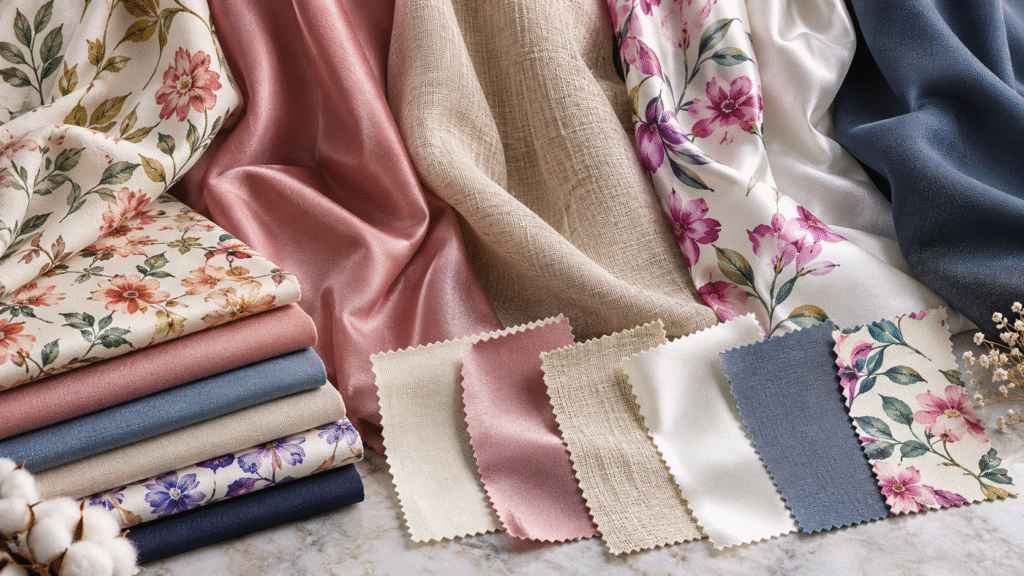
Real Brand Story: From Idea to Printed Collection (Case Study)
Meera ran a small womenswear label out of Ahmedabad. Twelve designs in her head, a tight budget, and one big worry: what if nothing sold?
She started with three prints, not twelve. Digital printing on rayon, small batches, two rounds of strike-offs. The first sample came back too dark. The second was close. The third? She actually gasped, she said.
The collection sold out in weeks. So she printed the two best sellers again, this time in bulk, and tried a new colourway. Nothing fancy. Just patience and a printer who answered her calls.
The lesson isn’t that she was lucky. She tested before she scaled. That’s the whole secret, really.Final Thoughts
Here’s what it all comes down to. Know your method, choose your fabric wisely, always sample, and pick a partner who treats your design like their own. Do that and custom fabric printing stops being a risk and starts being your brand’s quiet advantage.
Whether you’re a boutique owner, a growing label or an exporter, custom fabric printing India has the skills, the range and the pricing to support you. Start with one design. Test it. Learn from it. Then grow.
Ready to see your artwork on real fabric? Talk to the team at The Printink Co for samples, guidance and a no-pressure quote.