
Table of Contents
Introduction
The fashion industry in India continues to grow rapidly, especially in the women’s apparel segment where demand for ethnic wear, western outfits, fusion fashion, and ready-to-wear collections keeps increasing every season. For retailers, boutique owners, wholesalers, exporters, and fashion startups, selecting the right Women’s Wear Manufacturer is one of the most important business decisions.
A reliable Women’s Wear Manufacturer does much more than produce garments. They directly influence your product quality, customer satisfaction, delivery timelines, pricing structure, and long-term brand reputation. Choosing the wrong supplier often leads to delayed orders, inconsistent quality, fabric issues, and unhappy customers.
Whether you are launching a private label brand, scaling your retail business, or sourcing for bulk distribution, understanding how to select the right apparel production partner helps reduce risk and improve profitability. This guide explains the most important factors you should evaluate before placing your bulk orders.
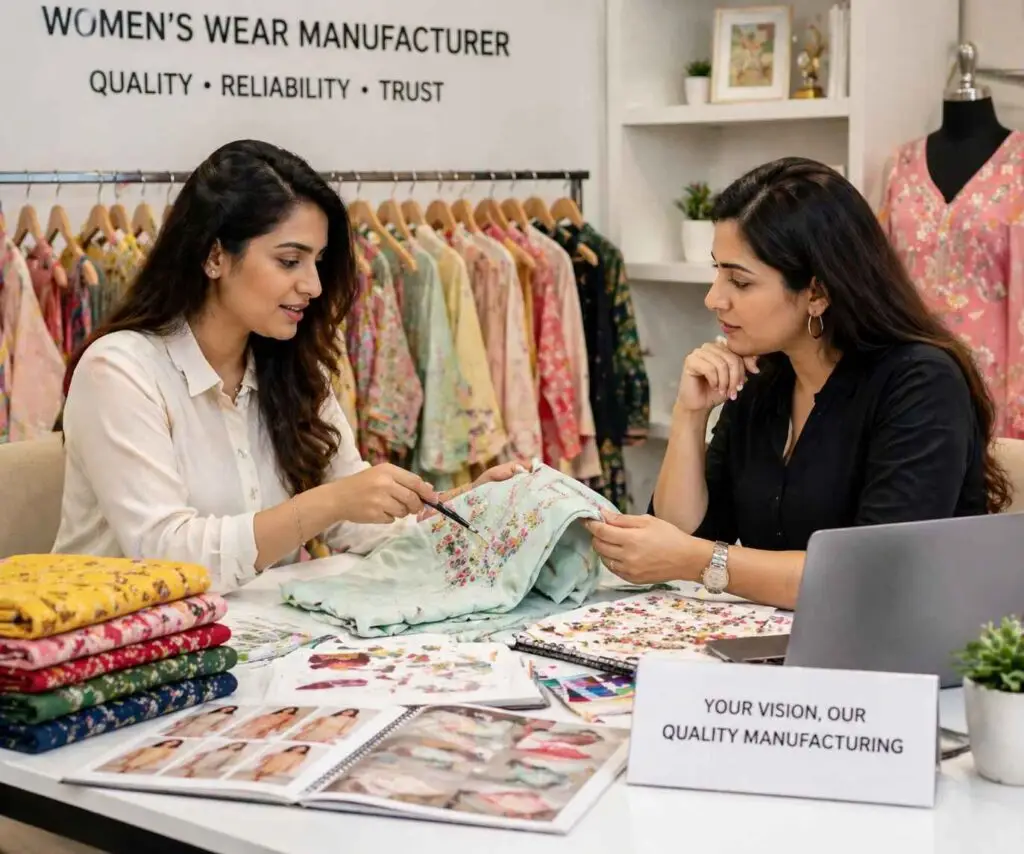
Why Choosing the Right Manufacturer Matters
Your manufacturing partner becomes the backbone of your fashion business when choosing a Women’s Wear Manufacturer. Even strong marketing and excellent sales strategies cannot compensate for poor product quality or delayed deliveries.
When your garments meet customer expectations in stitching, finishing, fabric feel, fitting, and durability, repeat purchases increase naturally. On the other hand, poor workmanship damages trust quickly.
A trusted production unit also helps maintain consistency across repeat orders. This is especially important for wholesalers and retailers who depend on stable inventory planning and predictable supply.
The right supplier creates stability, while the wrong one creates operational stress.
Understanding Your Business Requirements First
Product Category Clarity
Women’s fashion includes multiple categories such as kurtis, gowns, sarees, coord sets, western dresses, tops, tunics, loungewear, bridal wear, and occasion wear. Your sourcing requirements will differ based on the category.
A factory specializing in ethnic wear may not be the best fit for premium western fashion production. Category alignment matters.
Target Market Identification
Your target audience decides your production standards. Premium buyers expect superior finishing and designer detailing, while mass-market buyers may prioritize affordability and fast-moving inventory.
Understanding whether you serve boutique buyers, distributors, marketplaces, or export clients helps define your supplier expectations.
Budget and Order Volume
Bulk orders require clear financial planning. Minimum order quantity, payment terms, sampling charges, and production costs must align with your business capacity.
Factories that support scalable order volumes without compromising quality are ideal for long-term partnerships.
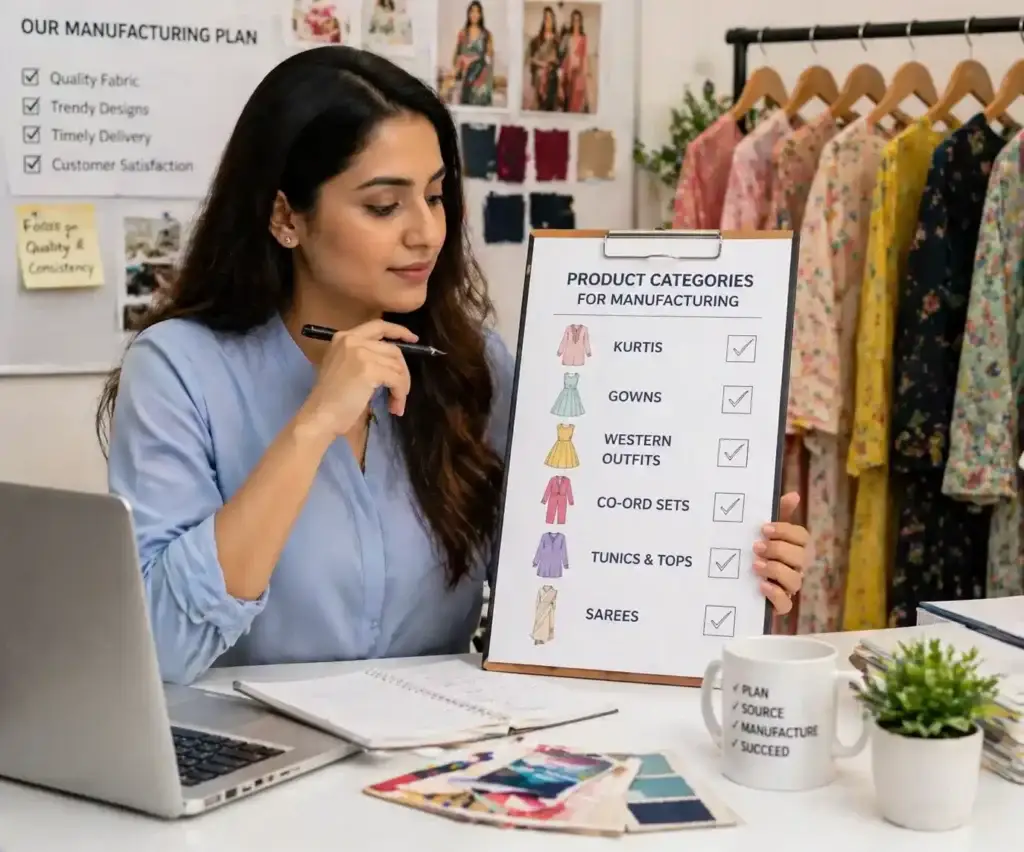
Key Factors to Check Before Selecting a Women’s Wear Manufacturer in India
Fabric Quality and Material Standards
Fabric is the foundation of every garment. No design can succeed if the base fabric performs poorly.
Buyers should check fabric consistency, shrinkage control, colorfastness, print quality, softness, and finishing standards. Poor fabric quality often leads to returns and customer complaints.
Reliable suppliers maintain strict sourcing standards for cotton, rayon, viscose, georgette, chiffon, silk blends, and other commonly used fashion fabrics.
Manufacturing Capacity for Bulk Production
Many businesses face problems because the supplier cannot handle scale during peak seasons.
Production capacity should include stitching units, quality control teams, finishing departments, packaging systems, and dispatch management. A supplier with strong infrastructure handles urgent and repeat orders more efficiently.
This becomes especially important during festive seasons, wedding demand spikes, and export deadlines.
Customization and Private Label Support
Modern buyers often need more than standard production. They require custom sizing, exclusive prints, branding labels, packaging support, and design flexibility.
Private label manufacturing helps businesses create stronger brand identity and better margins. A strong apparel partner should support these requirements without creating unnecessary delays.
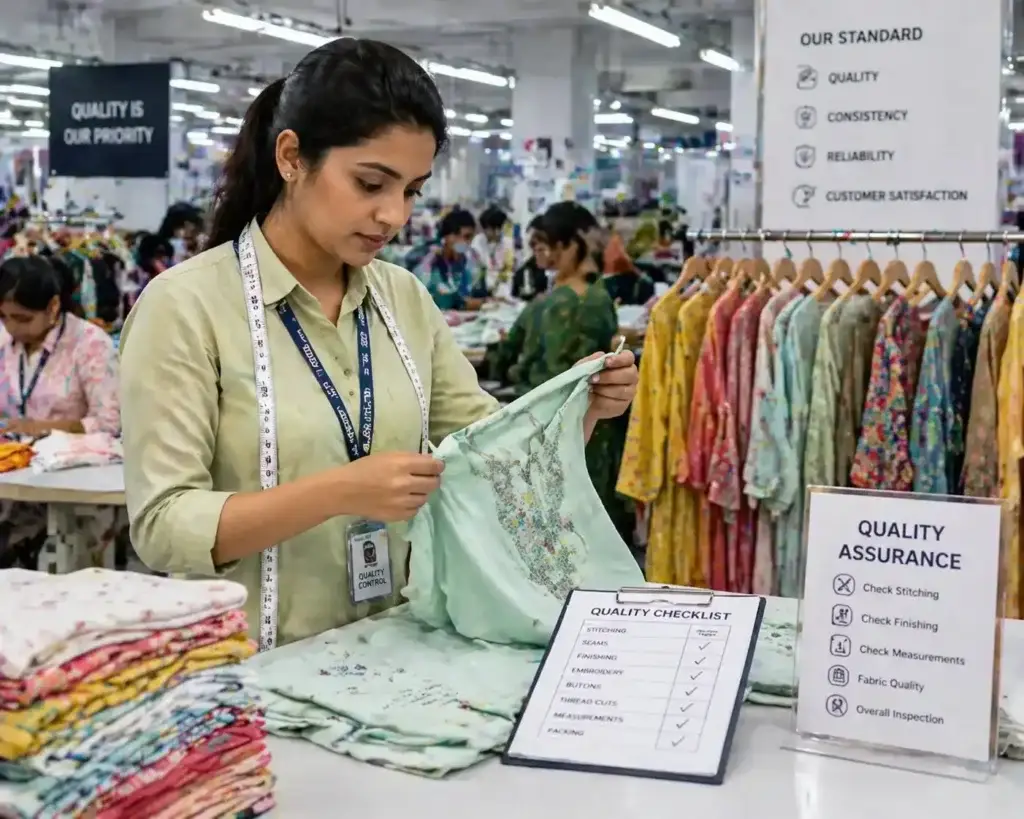
Quality Control Systems
Quality control should never be an afterthought.
Professional garment factories follow multiple inspection stages during cutting, stitching, finishing, and packing. This reduces rejection rates and improves consistency across batches.
Always ask how the supplier handles defect management and quality approvals.
Delivery Reliability
Delayed dispatch creates serious business losses, especially for wholesalers and online sellers.
Production partners must have strong supply chain systems that ensure timelines are realistic and consistently maintained. Communication transparency also matters during urgent situations.
Why Experience in Manufacturing Reduces Business Risk
Experience creates predictability. Factories with years of expertise understand seasonal demand cycles, fabric behavior, buyer expectations, and production challenges better than new setups.
Experienced suppliers also manage repeat orders with better accuracy because they already understand workflow optimization.
They can recommend practical improvements in designs, finishing methods, packaging, and pricing strategies based on market demand.
This guidance becomes highly valuable for startups and growing fashion businesses.
Certifications and Compliance You Should Verify
Quality Certifications
Ethical Manufacturing Standards
Labor practices, workplace safety, and responsible production processes are increasingly important, especially for export buyers and premium brands.
Ethical manufacturing improves both compliance and brand credibility.
Export Readiness
International buyers should verify documentation standards, packaging compliance, and logistics capability for overseas shipping.
A supplier prepared for export requirements saves time and reduces operational complications.
Questions You Should Ask Before Finalizing a Supplier
Strong decisions come from better questions.
Before confirming your production partner, ask about:
- Minimum order quantity
- Sample approval timelines
- Fabric sourcing process
- Delivery commitments
- Replacement policies
- Payment terms
- Production lead time
- Branding and labeling support
These discussions prevent misunderstandings later and help build transparent partnerships.
Why Surat is a Preferred Hub for Women’s Wear Manufacturing
Surat has become one of India’s strongest textile and garment production centers for Women’s Wear Manufacturer.
Its massive fabric ecosystem, skilled workforce, advanced machinery, and strong supply chain network make it highly attractive for fashion businesses across India and abroad.
Retailers and wholesalers prefer Surat because sourcing becomes faster, more affordable, and more scalable compared to fragmented supply regions.
The city supports both premium design-focused production and large-scale volume manufacturing, making it suitable for startups as well as established brands.
This combination gives buyers both flexibility and commercial advantage.
Common Mistakes Buyers Should Avoid
Many businesses lose money because they focus only on pricing while selecting a Women’s Wear Manufacturer.
Choosing the cheapest supplier often results in hidden losses through poor stitching, weak fabrics, delayed dispatches, and damaged customer trust.
Ignoring sample approvals is another major mistake. A sample helps validate finishing standards before full production begins.
Some buyers also skip factory verification and rely only on promises. Production capability should always be verified before placing high-value bulk orders.
Smart sourcing is based on reliability, not just price.
Final Checklist Before Placing Your Bulk Order
Before confirming your first production run with a Women’s Wear Manufacturer, ensure all specifications are documented clearly.
Product details should include measurements, fabric details, color approvals, finishing expectations, branding instructions, packaging requirements, and delivery schedules.
Written clarity protects both buyer and supplier.
Transparent communication, proper approvals, and mutual expectations help create smooth execution and long-term trust.
This step is often small but prevents major losses later.
Conclusion
Choosing the right Women’s Wear Manufacturer is not just about placing an order it is about building a strong and long-term business foundation. The right manufacturing partner helps maintain product quality, ensures timely delivery, supports customization, and protects your brand reputation in the market. On the other hand, the wrong supplier can lead to repeated delays, poor finishing, quality issues, and customer dissatisfaction.
Successful businesses always treat manufacturing as a growth strategy, not just a cost-saving decision. When you invest in the right production partner, scaling becomes faster, smoother, and more profitable. Whether you are a boutique owner, retailer, distributor, or fashion startup, having a reliable supplier creates long-term stability and stronger customer trust.
If you are looking for premium bulk production, private label support, consistent fabric quality, and dependable delivery timelines, The Printink Co. is your trusted manufacturing partner. From custom production to large-scale bulk order management, our team helps fashion businesses grow with confidence and quality. Connect with The Printink Co. today and build your next successful women’s wear collection with a partner you can trust.