Table of Contents
Introduction
The fashion world has always been rich in reinvention, but few innovations have reshaped textile manufacturing as profoundly as digital printing technology. Walk into any modern boutique, scroll through Instagram, or browse a designer’s lookbook, and you’ll notice an unmistakable shift in bold patterns, photorealistic florals, abstract gradients, and hyper-personalized prints dominating racks and runways alike. Behind this visual revolution lies a quiet but powerful force: digital printed fabric, which has rapidly become the backbone of modern apparel design.
From luxury houses in Milan to emerging boutique brands in Surat and Jaipur, the move toward digitally printed textiles is no longer a niche experiment. It’s a global movement driven by consumer demand for individuality, sustainability, and speed. Understanding the trajectory of digital printed fabric in today’s industry helps explain why so many designers, manufacturers, and consumers are embracing it so rapidly.
What Makes Digitally Printed Textiles So Compelling Today?
Traditional fabric printing methods like screen printing and rotary printing have served the textile industry for decades. However, they carry limitations, high setup costs, large minimum order quantities, restricted color palettes, and significant water and chemical use. Digital fabric printing flips this entire model on its head.
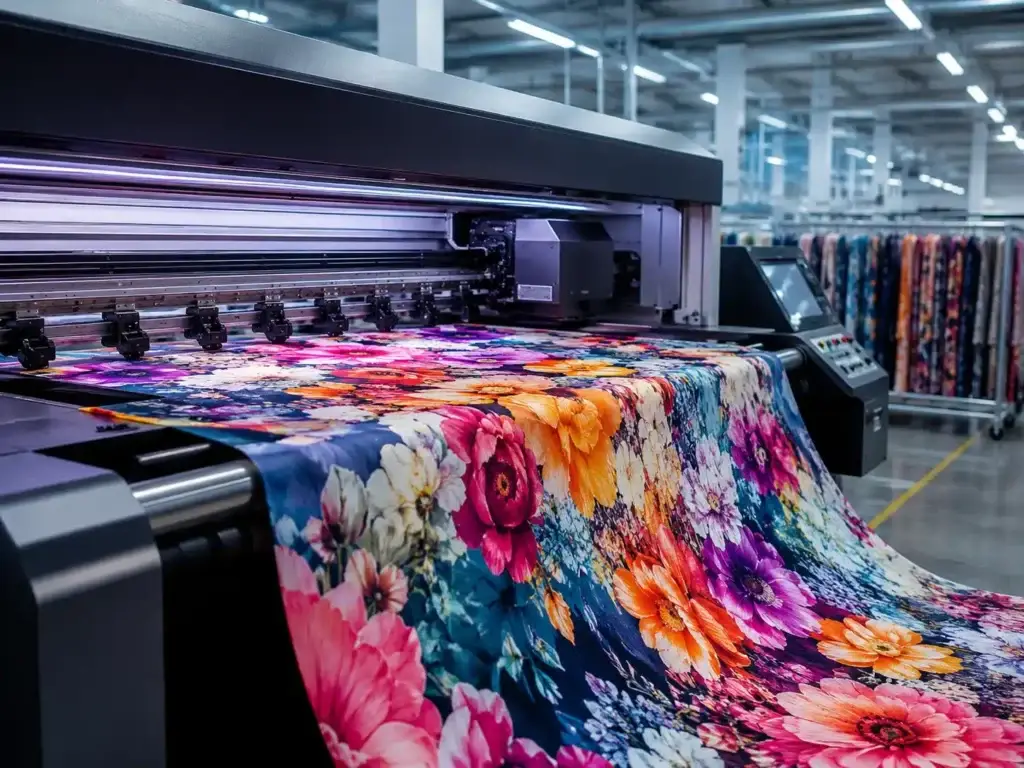
Using inkjet-based technology, designs are printed directly from a computer file onto cloth, eliminating the need for screens, plates, or rollers. The result is sharper detail, virtually unlimited color combinations, and the ability to produce small runs economically. This is precisely why digital printed fabric has emerged as the go-to choice for designers who want to experiment freely, test new aesthetics, and bring fresh collections to market within days rather than months.
The Driving Forces Behind the Digital Printing Revolution
Speed That Matches Modern Fashion Cycles
Fast fashion and slow fashion brands face the same pressure today to respond quickly to trends or lose relevance. Digital printing allows brands to move from concept to finished textile in hours. There’s no need to engrave screens or mix bulk dye batches. A designer can finalize artwork in the morning and have printed yardage by evening, a turnaround that conventional methods simply cannot match. This responsiveness has become especially valuable in a social-media-driven market, where a viral trend can shape demand within 48 hours and brands need production cycles short enough to capture that moment before it fades.
This agility is a major reason digital printed fabric has become the preferred choice for designers launching capsule collections, seasonal drops, and limited-edition pieces.
Limitless Creative Freedom
With conventional printing, every additional color increases cost and complexity. Digital print technology removes that ceiling entirely. With precision, we can reproduce photographs, watercolor illustrations, intricate motifs, gradients, and even 3D-style visuals. Designers are no longer constrained by the capabilities of the machine; they are limited only by their imagination.
This creative liberation has particularly benefited Indian designers working with ethnic silhouettes, allowing intricate paisleys, mughal-inspired florals, and contemporary fusions to coexist beautifully on a single garment. International labels too are using this freedom to revive heritage motifs, collaborate with illustrators, and experiment with collections that would have been financially impossible under older printing methods.
A Step Toward Sustainable Manufacturing
Sustainability is no longer a buzzword; it’s a buying criterion. Younger consumers, especially Gen Z and millennials, actively choose brands that demonstrate environmental responsibility. Digital textile printing uses up to 95% less water and significantly fewer chemicals than rotary or screen printing. Inks are applied only where needed, drastically reducing waste.
For brands aiming to meet ESG (Environmental, Social, Governance) goals or qualify for sustainability certifications, switching to digitally printed textiles offers a measurable, marketable advantage that resonates with modern buyers.
How Digital Printed Fabric is Reshaping Fashion Brands
Empowering Independent Designers and Small Labels
Before digital printing, launching a custom clothing line required significant capital bulk orders, warehouse space, and inventory risk. Today, a designer can order as little as a few meters of custom-printed yardage without compromising on quality. This democratization has fueled the rise of independent labels, Etsy boutiques, and direct-to-consumer brands.
The result is a more diverse fashion ecosystem where small creators can compete for creativity rather than capital. New designers can launch test collections, validate demand, and scale up only when they see traction, a model that significantly reduces financial risk and encourages bolder design choices.
Meeting the Rising Demand for Personalization
Modern consumers want clothes that reflect their identity. From monogrammed bridal wear to one-of-a-kind prints for influencers, personalization is now a key differentiator. Digital printed fabric makes such customization possible at scale; every meter can carry a different design, color, or pattern without halting production.
This capability has opened entirely new revenue streams, from made-to-order ethnic wear to bespoke streetwear collaborations that simply weren’t feasible a decade ago.
Real-World Applications Across Fashion Segments
The versatility of digital fabric printing touches almost every category in the wardrobe. Here are the areas where the impact is most visible:
- Ethnic Womenswear: Sarees, kurtis, dupattas, and lehengas featuring intricate, photo-realistic prints
- Western Wear: Dresses, shirts, and skirts with contemporary motifs and gradient effects
- Activewear: Performance fabrics carrying bold, sweat-resistant designs
- Home Furnishing: Cushions, drapes, and upholstery extending fashion aesthetics into interiors
Indian textile hubs like Surat, Jaipur, and Ahmedabad have embraced this technology aggressively, exporting digitally printed yardage to global markets. Designers from Sabyasachi to Anita Dongre, along with countless emerging labels, are integrating digital prints into their signature collections.
Digital vs Traditional Printing Understanding the Real Shift
It’s tempting to view digital printing as simply a faster version of traditional methods, but the difference runs deeper. Conventional printing thrives in large production runs of simple designs, where setup costs spread over thousands of meters. Digital printing excels everywhere else in short runs, complex artwork, frequent design changes, and just-in-time inventory.
For small to mid-sized brands, the economics increasingly favor going digital. Even larger manufacturers now adopt hybrid models, using digital printing for design development, sampling, and limited editions while reserving traditional methods for bulk staples. This blended approach lets businesses balance cost efficiency with creative agility, ensuring they can serve both mass-market demand and the growing appetite for niche, design-driven products at the same time.
What to Consider Before Choosing Digital Printed Fabric
While the benefits are substantial, informed buyers approach the technology with the right expectations. Not every textile responds equally to digital inks; cotton, silk, polyester, and viscose all behave differently. Reactive inks work beautifully on natural fibers, sublimation suits polyester, and pigment-based inks offer versatility with a slightly different hand feel.
Color fastness, ink quality, and finishing processes also influence the final product’s durability. Working with an experienced print partner who understands fabric chemistry, color management, and finishing techniques is critical to achieving consistent, premium results across every batch.
The Future of Digitally Printed Textiles in Fashion
Industry analysts expect the global digital textile printing market to continue expanding rapidly through 2030, driven by demand for sustainable production and on-demand manufacturing. Emerging technologies like AI-assisted design generation, faster industrial printers, and improved eco-friendly inks promise to push the medium even further. We’re already seeing the early signs of this shift, with print speeds rising year over year and ink chemistry advancing to deliver richer colors, better durability, and a softer hand feel on a wider range of fibers.
We’re also witnessing a shift toward localized, on-demand production. Instead of shipping bulk goods across continents, brands are setting up regional digital print hubs, reducing logistics costs and carbon footprints simultaneously. The future of digital printed fabric in this landscape looks even more promising, with India well-positioned to lead the next chapter of global textile innovation thanks to its blend of traditional craftsmanship and modern digital capabilities.
Why Fashion Brands Are Choosing Digital Printed Fabric for Long-Term Growth
What began as a technological convenience has evolved into a strategic advantage. Brands embracing digital printed fabric benefit from lower inventory risk, faster trend response, broader design freedom, and a stronger sustainability narrative, every one a crucial element for thriving in today’s competitive landscape.
Whether you’re a designer launching your first collection, an established label diversifying production, or a buyer sourcing yardage for the next season, digital printing offers the flexibility and quality modern fashion demands.
Conclusion
At The Printink Co., we bring together advanced print technology, deep textile expertise, and a designer-first approach to deliver exceptional digitally printed textiles. From established fashion houses to independent labels, we help brands transform creative visions into stunning, market-ready fabrics with no minimum order pressure, accurate color reproduction, and sustainable processes built into every step.
If you’re ready to explore how digital printed fabric can elevate your next collection, connect with our team today. Whether you need sampling, bulk yardage, or end-to-end design support, The Printink Co. is your trusted partner for high-quality print-on-demand textile solutions that move your brand forward.